
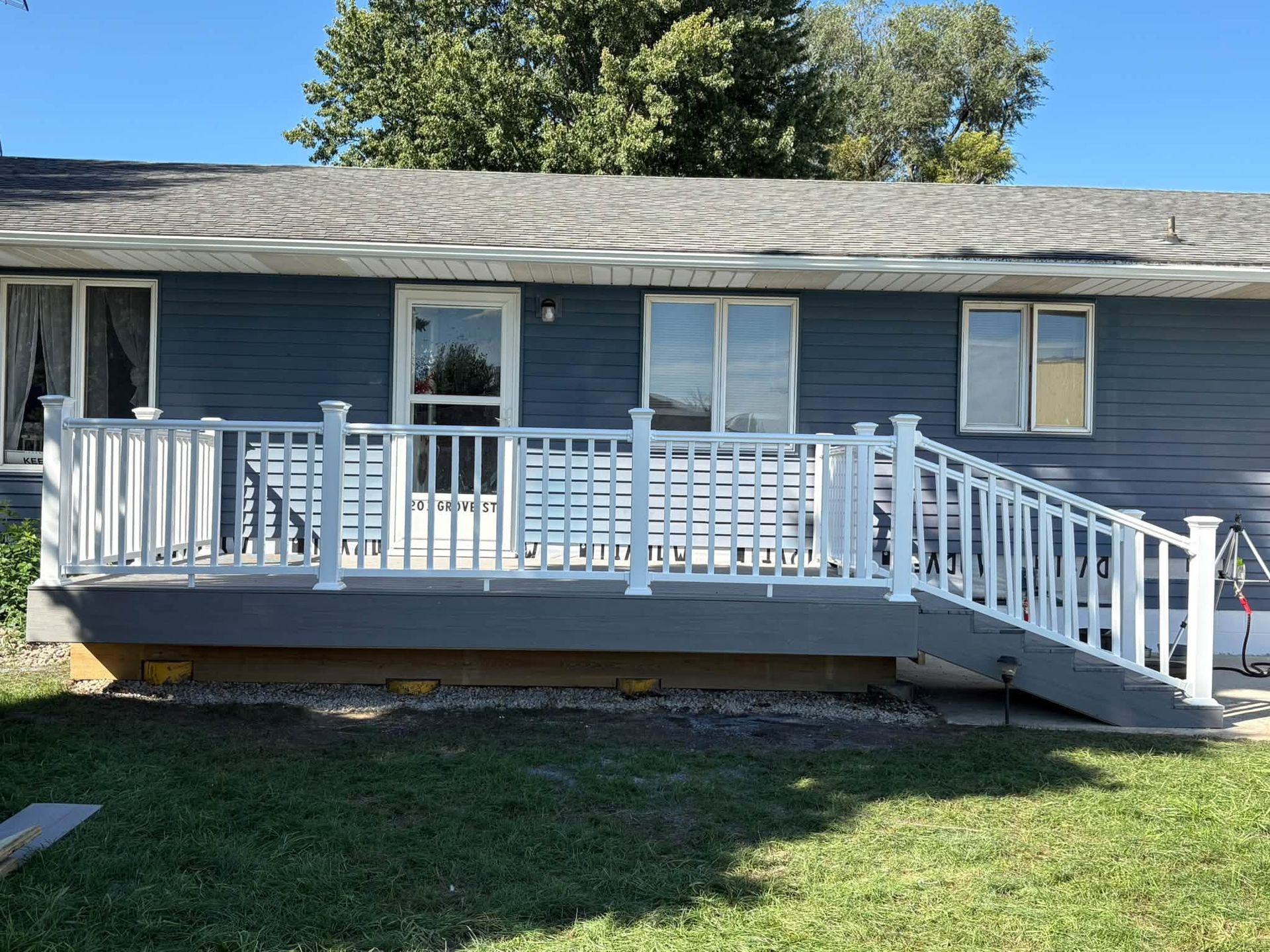
Decks Designed for Frost Line Depth
Decks in Fredericksburg for properties where freeze-thaw cycles and snow load require proper post footing installation
Iowa's frost line sits forty-two inches below grade, which means deck post footings must extend deeper than that threshold or freeze-thaw action will shift your entire structure over time, creating the gap between deck and house that allows water intrusion during spring melt. True Quality Construction builds decks for residential properties in Fredericksburg with footing depth matched to frost line requirements and drainage design that prevents ice dam buildup where the deck attaches to your home. Proper installation eliminates the deck-house connection point as a water intrusion pathway, a consideration that matters significantly in Fayette County where March and April meltwater tests every exterior junction.
Deck construction accounts for snow load in both post sizing and joist spacing, using treated lumber, composite decking, or pressure-treated framing based on your durability preferences and maintenance willingness. Slope design ensures snow and water runoff move away from the house rather than pooling against the foundation or backing up under door thresholds during melt events. Flashing where the deck ledger board attaches to your home creates a weather barrier that sheds water over the connection rather than allowing it to migrate behind siding into wall cavities—the same principle that governs all exterior transition points in Iowa housing.
Arrange an on-site consultation to review foundation requirements and deck-house connection details for your property..
How Deck Installation Addresses Regional Durability Requirements
Deck work for Fredericksburg properties starts with post footing placement below frost line depth to prevent the heave and settlement that occurs when footings sit too shallow and freeze-thaw cycles shift soil. Each post footing gets poured to forty-two inches minimum, with additional depth in areas where soil drainage creates frost penetration risk. Material selection determines maintenance intervals—composite decking eliminates annual sealing requirements but costs more upfront, while treated lumber offers lower initial expense with ongoing preservation needs over the deck's lifespan.
After construction completes, you'll notice that the deck remains level year after year without the sag or separation from the house that signals footing movement, snow melts off the deck surface without pooling near the door threshold, and the ledger board connection stays dry even during heavy spring runoff when neighboring properties develop rot at that junction. The flashing system at the deck-house connection prevents water from migrating behind your siding, eliminating the concealed leak pathway that often goes unnoticed until interior wall damage appears.
Deck projects include integration with home exterior assessment findings because proper installation depends on understanding existing drainage patterns and water intrusion risk at the connection point. Design options account for how you use the space—decks below roof valleys require upgraded drainage to handle concentrated snow and ice melt, while elevated decks need stair and railing systems that meet code while shedding snow accumulation safely.
Questions Before Starting Your Project
Deck construction questions frequently focus on footing requirements and material durability, especially for homeowners replacing failed decks where improper installation caused structural movement or water damage at the house connection.
Why does Iowa frost line depth matter for deck post footings?
Footings above forty-two inches experience heave during freeze-thaw cycles as expanding frozen soil pushes posts upward in winter and allows settlement when soil thaws in spring, creating the cumulative movement that separates decks from houses and damages ledger board connections over time.
What deck material works best for Fredericksburg snow load and weather exposure?
Composite decking resists moisture absorption and eliminates the annual sealing requirement that treated lumber needs for rot prevention, though both options handle snow load adequately when joist spacing accounts for Iowa's typical winter accumulation throughout Fayette County.
How does deck-house flashing prevent water intrusion during spring melt?
Flashing installation above the ledger board creates a drainage plane that directs meltwater over the connection point rather than allowing it to seep behind siding into wall cavities, preventing the concealed rot pattern common where decks attach to homes in regions with significant snow and ice dam problems.
When should deck drainage design account for roof runoff patterns?
Decks positioned below roof valleys or lacking gutter protection receive concentrated snow and ice melt during spring, requiring slope design that moves water away from the house and prevents pooling against foundation walls or under door thresholds common to Fredericksburg properties in March and April.
What's included in deck construction beyond the walking surface?
Complete deck installation includes post footings below frost line, flashing at the ledger board connection, proper slope for drainage, and stair systems that shed snow and ice rather than accumulating buildup that creates slip hazards during Iowa winter conditions.
True Quality Construction builds decks matched to Fayette County frost line requirements and coordinates all work with home exterior assessment to prevent water intrusion at deck-house connections. Reach True Quality Construction at (563) 578-7261 to discuss deck design options and schedule a site evaluation for your Fredericksburg property.